How Hypnotherapy Regulates the Nervous System — The Science, the Practice, and Why Embodiment is the Missing Piece

Updated: 2 days ago
By Charlotte Ferrier | RTT Therapist, Clinical Hypnotherapist & Embodiment Coach
Something is shifting in how we understand mental health and wellbeing. "Nervous system regulation" has become one of the most searched wellness terms of the past two years — and for good reason. People are beginning to understand that anxiety, emotional reactivity, overwhelm and chronic stress aren't character flaws or signs of weakness. They are nervous system responses. And nervous system responses can be changed.
What is less widely known is that hypnotherapy is one of the ways people work directly with the nervous system, and there is a growing body of research on how hypnosis affects the body's stress response. When it's combined with body-based practice, I find the work can go deeper.
In this article I want to share both the science and the practice: what early research shows about hypnosis and the nervous system, how RTT goes deeper than conventional approaches in my experience, and why I bring the body into the work through embodiment coaching.
What is Nervous System Dysregulation?
Your autonomic nervous system (ANS) regulates the body's unconscious functions — heart rate, breathing, digestion, stress responses. It operates largely below conscious awareness, constantly scanning your environment for signs of threat or safety.
When it perceives danger — whether physical or emotional — it activates the sympathetic branch: the fight, flight or freeze response. Heart rate increases, cortisol floods the system, digestion slows, and all available energy is directed toward survival.
This is an extraordinarily effective system. The problem is that in modern life, the nervous system frequently cannot distinguish between a genuine physical threat and an emotional or psychological one. A difficult email, a conflict, a memory, a crowded room — all can trigger the same cascade as genuine danger.
When this happens repeatedly — or when early life experiences taught the nervous system that the world is fundamentally unsafe — the system can get stuck in a state of chronic activation. This is nervous system dysregulation. And it underlies a vast range of conditions: anxiety, overthinking, emotional reactivity, OCD behaviours, chronic stress, exhaustion, poor sleep, skin conditions, and a persistent sense of disconnection from oneself and others.
The Science: What Does Hypnosis Actually Do to the Nervous System?
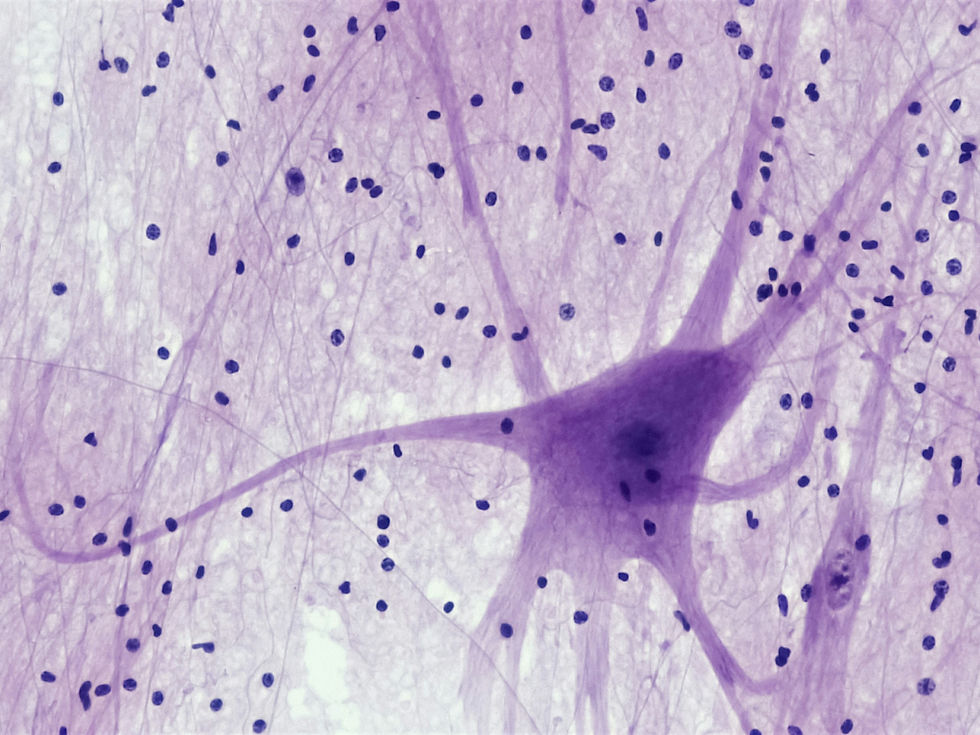
Research on hypnosis and the autonomic nervous system is growing. It's still early, but it's worth knowing about.
A 2024 review by De Benedittis¹ concluded that studies consistently show hypnosis can lower sympathetic (fight-or-flight) activity and raise parasympathetic (rest-and-restore) tone, especially during relaxation.
A 2025 follow-up review² describes the same shift in pain therapy and calls the approach promising.
A 2026 controlled study in Scientific Reports³ found that one hypnosis session reduced stress and anxiety and improved parasympathetic recovery in 49 final-year medical students, compared with a breath-focused exercise.
For anxiety, a 2019 meta-analysis of 15 studies⁴ found hypnosis reduced anxiety more than control conditions.
A 2025 meta-analysis of 20 randomised trials⁵ found hypnosis reduced anxiety and pain during invasive medical procedures. Oakley and Halligan⁶, in Nature Reviews Neuroscience, review what hypnosis reveals about attention, pain and brain mechanisms.
A 2017 brain-imaging study in Cerebral Cortex⁷ found that hypnosis changes activity in brain networks involved in attention, bodily awareness and self-focused thinking. A 2018 systematic review⁸ described hypnosis as a promising treatment for sleep problems.
In short: the research suggests hypnosis can influence how the body responds to stress and can help with anxiety, which is why I work with hypnotherapy and the body together.
Why RTT Goes Deeper
Conventional hypnotherapy typically works by delivering positive suggestions to the subconscious mind while you are in a relaxed state. This can be genuinely helpful. But RTT — Rapid Transformational Therapy, developed by world-renowned therapist Marisa Peer — goes a step further.
With RTT, we don't just soothe the nervous system. We find out why it became dysregulated in the first place.
Here is how I explain it to clients: imagine a smoke alarm going off in your house. You can open windows, fan the air, try to muffle the sound — and that might bring temporary relief. But RTT finds the thing that is actually burning.
In an RTT session, I guide you into hypnosis — a deeply relaxed, focused state in which the subconscious mind becomes accessible — and from there we go back to the experiences that first taught your nervous system to operate in a state of threat.
We visit at least three scenes from your past — not to relive them painfully, but to understand them. We find the beliefs that were formed in those moments. Often these beliefs were created in childhood, when we lacked the resources and perspective we have now. A child who experienced emotional unpredictability might grow into an adult whose nervous system is permanently braced for the next shock — not because danger is present, but because the old belief, locked in the subconscious, says it always might be.
Once we understand the belief, we can work with it. We give the part of you that has been running the old protective programme a voice — asking it what it has been trying to do for you, and why. This is often a profound moment of self-compassion. And once that part of you has been heard and understood, we can ask it to do something different: something that serves who you are now, rather than who you were then.
We then release the child from those old scenes, upgrade the subconscious beliefs, and install new, powerful ones. The result is not just relaxation but a fundamental shift in how the nervous system interprets the world.
Clients often describe it as: "Something that was always switched on has finally switched off."
The Subconscious-Nervous System Connection
Your subconscious mind and your nervous system are in constant communication.
The subconscious holds every experience, emotion and belief you have ever formed — and it uses this vast library to predict threats and prepare your body to respond. When the subconscious holds beliefs such as "I am not safe," "I must stay in control," "Something bad is about to happen" — it keeps the nervous system primed for danger, even when you are sitting quietly in your own home.
Much of what shapes our reactions happens below conscious awareness. Hassin⁹ argues that unconscious processes can carry out many of the same high-level functions as conscious thought.
In my work, hypnotherapy works directly with the subconscious — bypassing the analytical conscious mind that usually resists change — to update the beliefs at the root of dysregulation. When the subconscious no longer perceives the same level of threat, the nervous system can begin to settle.
Why Embodiment Coaching is the Missing Piece

Hypnotherapy works powerfully on the mind-subconscious connection. But nervous system regulation has a physical dimension that is equally important — and this is where embodiment coaching comes in.
Your nervous system lives in your body. Stress, anxiety and dysregulation are not only psychological experiences — they are held physically, in patterns of tension, in how you breathe, in how you inhabit your own skin. Many people living with chronic anxiety have become profoundly disconnected from their bodies, living almost entirely in their heads and using mental activity to stay ahead of the feelings they are afraid of.
Polyvagal Theory, developed by Dr Stephen Porges,¹⁰ is a widely used framework in trauma-informed and somatic work, including by practitioners such as Deb Dana. It offers a helpful map of how the nervous system moves between safety, mobilisation (fight/flight) and shutdown (freeze), and how the body signals which state we're in. I use it as a practical map of how the body responds to safety and stress.
Coming back into the body — learning to feel it, listen to it, and communicate with it — is therefore not a luxury but a necessity for lasting nervous system regulation.
The body-based tools I use have their own research behind them. Somatic Experiencing, developed by Peter Levine, produced positive results in a randomised trial for PTSD,¹¹ and a 2021 review described the evidence as promising.¹² Yoga Nidra has been linked to a shift towards parasympathetic activity.¹³
Embodiment coaching creates exactly this. Through breath, presence, movement and somatic awareness, we rebuild your capacity to feel safe in your body — not just to understand intellectually that you are safe, but to actually experience it as a felt, physical reality.
This is the missing piece that so many people who have done therapy or mindfulness practice find is still absent: they can think their way to calm, but they cannot yet feel their way there.
The Complete Approach: Release, Reconnect, Maintain
When RTT, embodiment coaching and ongoing practice are combined, they work on every layer of nervous system dysregulation:
Release — RTT and hypnotherapy clear the subconscious triggers that keep the nervous system in a state of threat. The root cause is found and released, not managed.
Reconnect — Embodiment coaching brings you back into the body. You develop the capacity to feel safe physically, listen to your body's signals, and respond rather than react.
Maintain — Practices such as yoga nidra — one of the oldest forms of guided meditation, which uses the same trance mechanisms as hypnosis to bring you into the deeply restorative alpha and theta brainwave states — provide an ongoing daily tool for maintaining the regulation you have created.
This is not symptom management. It is genuine, lasting change at the level of the nervous system itself.
What Clients Experience
People who come to me with nervous system dysregulation often describe:
Constant low-level anxiety that never fully switches off
Difficulty being present — always thinking ahead, replaying the past
Emotional reactivity that feels out of proportion and out of control
Physical symptoms: tight chest, shallow breathing, poor sleep, tension
Exhaustion from always being "on"
A deep sense of disconnection from themselves and the people they love
After working together, they describe:
A quietness where there used to be constant noise
Being able to pause before reacting
Feeling genuinely at home in their body for the first time
Sleeping properly
Responding to life rather than bracing against it
A Note on Why This Works When Other Things Haven't
If you have tried talking therapy, meditation, positive thinking, or willpower and found that something keeps pulling you back — this is why.
These approaches work at the level of conscious thought and behaviour. But nervous system dysregulation has its roots in the subconscious, in the body, and in the autonomic patterns laid down long before conscious reasoning developed. Reaching those roots requires working at the level where they exist.
Hypnotherapy, RTT and embodiment coaching work precisely there.
Book a Free Clarity Call
If you recognise yourself in any of the above and would like to find out whether this approach is right for you, I offer a free 20-minute clarity call. We'll talk through what you're experiencing and whether RTT, hypnotherapy and embodiment coaching could help.
Or find out more about The Nervous System Reset Programme — a complete three-stage programme combining RTT, embodiment coaching, hypnotherapy and yoga nidra:
References
De Benedittis (2024). Hypnotic modulation of autonomic nervous system (ANS) activity. Brain Sciences.
De Benedittis (2025). Balancing autonomic nervous system activity through hypnosis: clinical implications for pain therapy. Journal of Pain Research and Management.
Queirolo et al. (2026). Hypnosis reshapes multilevel stress response and enhances executive performance in stressed medical students. Scientific Reports.
Valentine et al. (2019). The efficacy of hypnosis as a treatment for anxiety: a meta-analysis. International Journal of Clinical and Experimental Hypnosis.
Walter et al. (2025). Hypnosis as a non-pharmacological intervention for invasive medical procedures: a systematic review and meta-analytic update. Journal of Psychosomatic Research.
Oakley & Halligan (2013). Hypnotic suggestion: opportunities for cognitive neuroscience. Nature Reviews Neuroscience.
Jiang et al. (2017). Brain activity and functional connectivity associated with hypnosis. Cerebral Cortex.
Chamine, Atchley & Oken (2018). Hypnosis intervention effects on sleep outcomes: a systematic review. Journal of Clinical Sleep Medicine.
Hassin (2013). Yes it can: on the functional abilities of the human unconscious. Perspectives on Psychological Science.
Porges (2025). Polyvagal theory: current status, clinical applications, and future directions. Clinical Neuropsychiatry.
Brom et al. (2017). Somatic Experiencing for posttraumatic stress disorder: a randomized controlled outcome study. Journal of Traumatic Stress.
Kuhfuß et al. (2021). Somatic experiencing: effectiveness and key factors of a body-oriented trauma therapy: a scoping literature review. European Journal of Psychotraumatology.
Markil et al. (2012). Yoga Nidra relaxation increases heart rate variability and is unaffected by a prior bout of Hatha yoga. Journal of Alternative and Complementary Medicine.
Charlotte Ferrier is an RTT therapist, clinical hypnotherapist and embodiment coach based in Stroud, with in-person sessions in Stroud, Cheltenham and Gloucester, and online sessions available worldwide. She trained directly with Marisa Peer and was a trainer at the Marisa Peer Academy. She has over 10 years of experience and 26 five-star reviews.


Comments